

Repointing in Beckenham and South East London
Repointing replaces worn or crumbling mortar between the bricks, so the wall keeps rain out and can dry. We repoint house and garden walls across Beckenham and South East London, and once the wall is dry, our own team makes good the damp-stained plaster inside.
- House walls and garden walls, in patches or whole
- Free visit and a written quote
- A reply to every enquiry within one working day
- Damp-stained plaster inside made good by our own team
- £5 million public liability insurance
4.9 out of 5
From 38 MyBuilder reviews
Get a quote for your repointing
Repointing work we take on
The work means raking out failed mortar and filling the joints again. We take on:
Patches: the most exposed walls, or the stretch below a leaking gutter.
Whole walls, where the joints have failed right across.
Garden and boundary walls, open to the weather on both sides.
Hard cement pointing on older brick, taken out where that can be done without damaging the bricks.
Signs your brickwork needs repointing
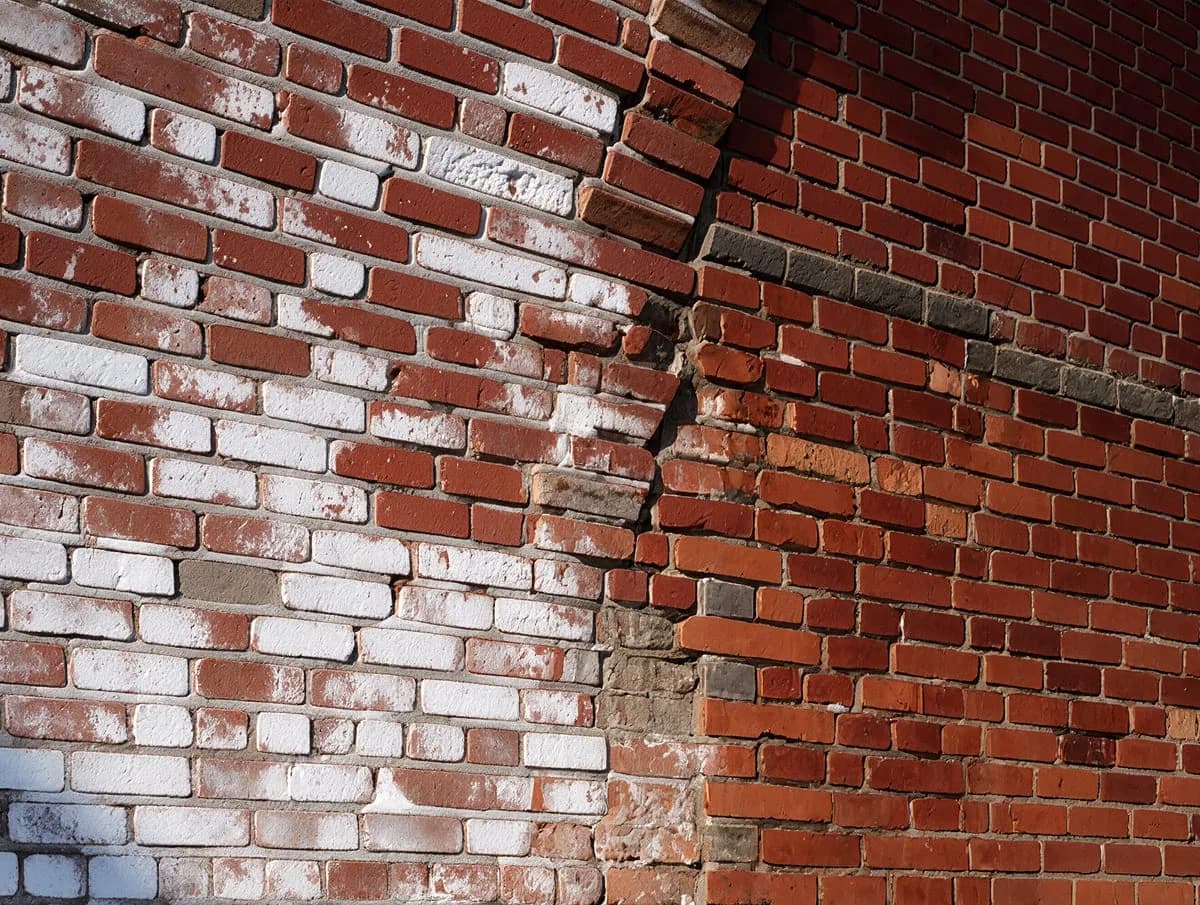
Mortar that crumbles or comes loose when you touch it
Joints worn back so far that the brick edges stand out, leaving a ledge where water can seep in
On an older house, grey cement pointing that is cracking or standing proud of (sticking out beyond) the bricks
Brick faces flaking next to hard cement joints
Damp on the inside of a solid wall (one with no cavity), where open joints let rain in
Plants or moss growing out of the joints
Historic England advises fixing whatever is wearing the joints, such as a leaking gutter, before repointing: see gutter repair.
Lime or cement: choosing the right mortar
On a house built before the early 20th century, the original mortar is almost certainly a lime mortar rather than cement, according to Historic England. For repointing older walls, its key principle is that the new mortar should be slightly weaker and more permeable than the brick or stone.
Read moreShow less
Most cement-based mortars are less permeable than the brick, so moisture can't evaporate through the joints and moves through the bricks instead, speeding up their decay. Mortar harder than the brick also risks cracking and damaging it, which is why Historic England says cement-rich mixes should be avoided.
Historic England adds that denser bricks can take a stronger mortar, such as a hydraulic lime mortar (a lime that sets harder, even when damp), where exposure calls for it, and very exposed spots, like a chimney, can need one.
If your house is listed, consent will usually be needed before any repointing; in a conservation area it could be, depending on the controls in place, so contact your council well before the work (Historic England's repointing guidance).
Joint profile and colour
The width, profile and texture of the joints shape how a wall looks:
Flush: finished level with the brick face, which Historic England says usually suits joints that are not specially treated.
Struck, keyed or tuck pointing: older finishes with a groove, a V-shaped groove, or a fine line of lime putty over coloured mortar.
Weather-struck and ribbon pointing: modern styles standing proud of the brick, which Historic England says to avoid on older masonry, as they give the joint too much emphasis.
For colour, look for original pointing in a sheltered spot, such as under the eaves or behind a downpipe. New patches look bright at first, but a well-matched mix soon weathers and tones down.
Why book us for the work
Damp marks indoors, dealt with
Once the wall is sound and dry, our own team repairs and repaints the stained plaster: see plastering.
A written price first
A free visit, then a written quote.
Easy to check
£5 million public liability, registered at Companies House in 2007, on Checkatrade and verified on MyBuilder.
From your photos to the finished wall
- 01
Send us a few photos of the wall.
- 02
We visit free of charge, look at the bricks and mortar, and send a written quote.
- 03
We rake out, repoint and clear up
How a building job runs, step by step: builders.
What repointing is priced on
The price depends on:
The area: how many square metres, in patches or whole walls.
Height and access: upper walls need a scaffold or a tower.
The old mortar: hard cement takes longer to cut out without harming the brick than soft, crumbling mortar.
Bricks to replace: flaking or broken ones found along the way: bricklayers.
Request a callback
What customers say
4.9
out of 5 from 38 reviews on
“They were on time and did a fantastic job. I would most definitely come to them in the first instance for any other decorating jobs!”
“We’re really really impressed with the level of finish and found them to be extremely courteous and respectful. We’d highly recommend them and would definitely use them again next time we need some work doing.”
“Such high quality work, very impressed Helped sort a few other issues as well when they were there”
Questions about repointing
Call 020 8249 7303
Does the whole house need repointing?
On an older house, rarely, says Historic England: generally only the parts most exposed to the weather, or affected by a problem such as a leaking gutter, are likely to need attention, and sound historic mortar should be left undisturbed.
How deep should old mortar be raked out?
On older walls, Historic England says to rake the joints out by hand, with hooked tools or chisels, to at least twice the height of the joint, often much deeper on rubble stonework (walls of rough, uncut stone). It doesn't recommend angle grinders, which can damage the brick face. Where the old pointing is hard cement, it says a thin diamond-disc cutter may be needed, used very carefully, to make the first cut.
Can I repoint brickwork myself?
It's possible, with training. Historic England says repointing with lime mortar should generally be done by an experienced contractor, but practically minded homeowners can master the skills. Lime handles very differently from cement and can severely irritate skin and eyes, so wear gloves, eye protection and a mask.
When is the best time of year to repoint?
Spring, summer or early autumn, if possible. Historic England advises avoiding lime work in very cold, hot or windy weather, and protecting new pointing from sun, rain and wind while it sets, and from frost in winter.
More brick and roof work
Chimney stacks, highly exposed to the weather: roof repairs.
Ridge tiles bedded in mortar along the top of the roof: tiled roof repairs.
Dirty or stained brick that may not need new joints: brick cleaning.
Painting or limewashing brick: our guide to painting brickwork.
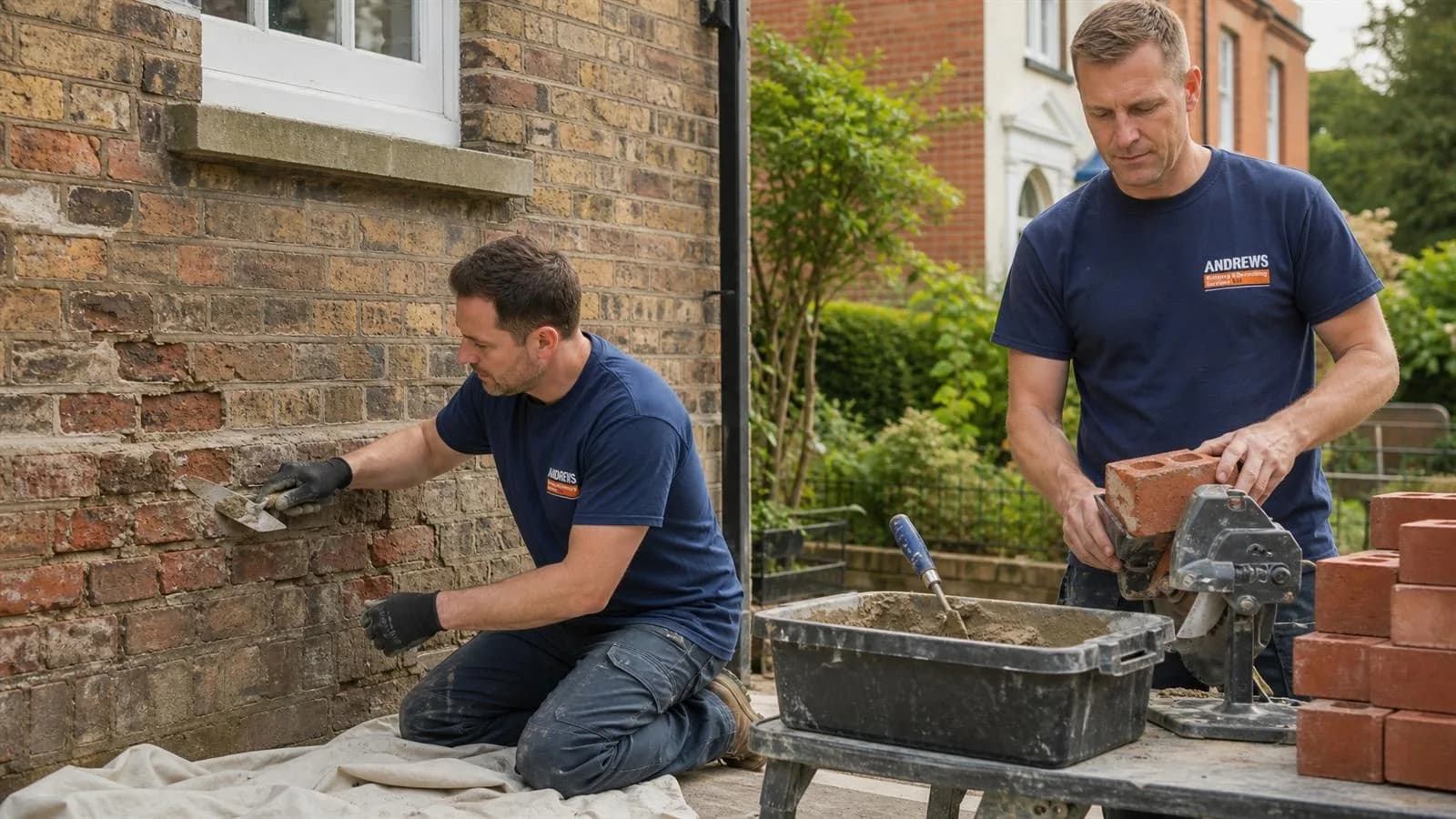
Builders in Beckenham and South East London
Builders in Beckenham and South East London from a family firm. Free visit, a written quote and tidy work.
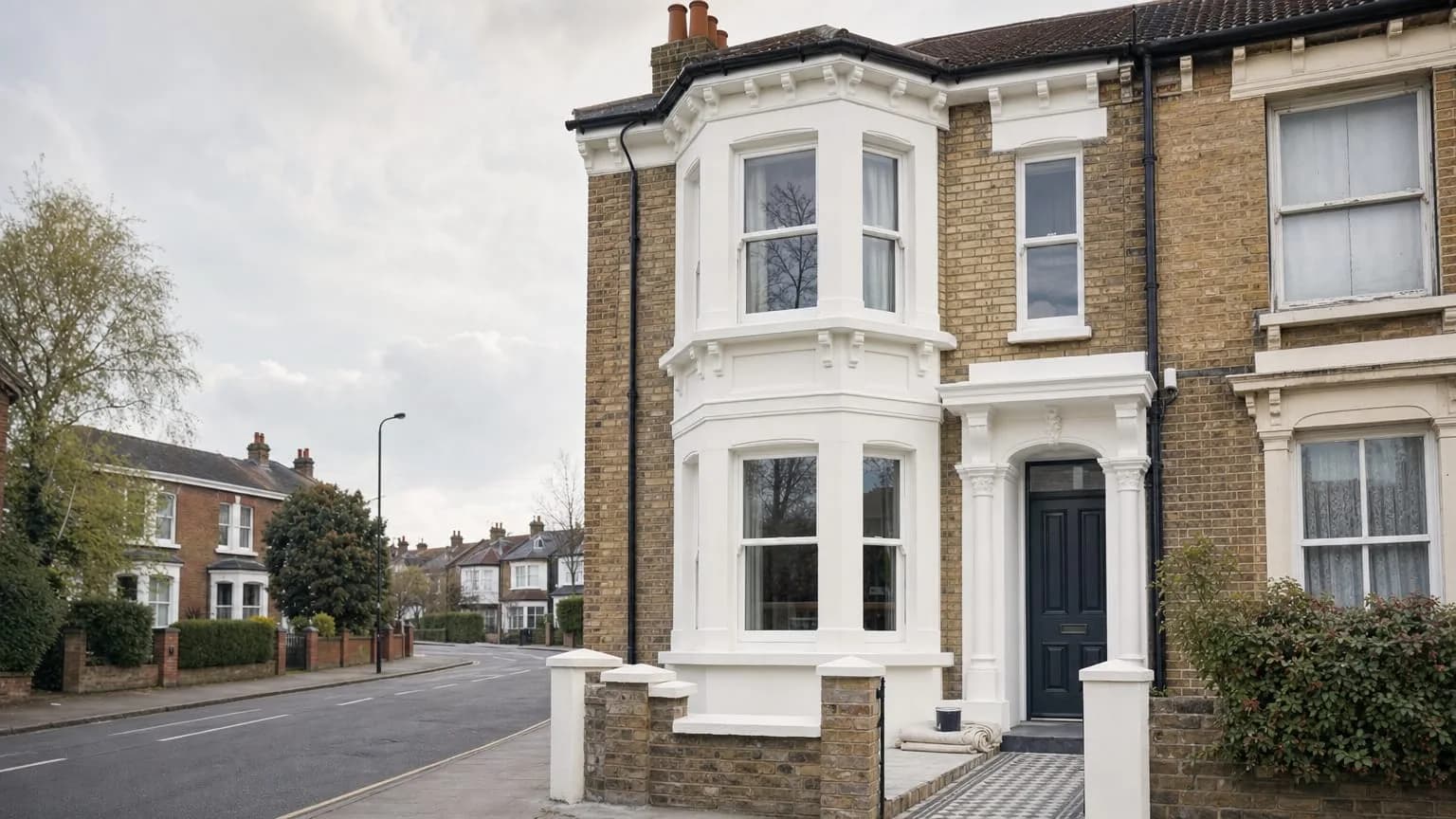
Home renovations in Beckenham and South East London
Home renovations in Beckenham and South East London from a family firm. Free visit, a written quote and tidy work.
Get a free site visit and written quote
Tell us where the job is and what needs doing. Every inquiry gets an answer within one working day.