

Awaab's Law: the rules and timescales for social housing repairs
Awaab's Law sets fixed deadlines for social landlords in England to investigate and make safe hazards in tenants' homes, starting with damp and mould. Here are the rules, the dates and what they mean for contractors, written by Beckenham painters, decorators and builders.
The rules are known as Awaab's Law in memory of Awaab Ishak, a two-year-old who died in 2020 from a severe respiratory condition caused by prolonged exposure to mould in his home. His parents had complained to their social landlord repeatedly over the three years before his death, and no action was taken to treat the mould.
Awaab's Law has been passed and is in force: it came into force for the social rented sector on 27 October 2025. The power to make it comes from the Social Housing (Regulation) Act 2023, which writes into every social tenancy a term requiring the landlord to comply. The detailed rules are in the Hazards in Social Housing (Prescribed Requirements) (England) Regulations 2025.
Phase 1 now, Phase 2 from 30 November 2026
The law is being introduced in phases. The Phase 1 guidance only said Phase 2 would come “in 2026”; the government's Phase 2 guidance gives the exact date, 30 November 2026.
| Phase | From | What it covers |
|---|---|---|
| Phase 1 | 27 October 2025 | All emergency hazards, and damp and mould hazards that present a significant risk of harm |
| Phase 2 | 30 November 2026 | Adds these hazards where they present a significant risk of harm: excess cold, excess heat, falls (on the level, on stairs and between levels), structural collapse, fire and explosions, electrical hazards, and domestic hygiene (including personal hygiene and food safety) |
| Phase 3 | No date confirmed | All remaining HHSRS hazards, apart from overcrowding |
The HHSRS is the Housing Health and Safety Rating System, the government's list of hazards used to assess the condition of homes. The older Phase 1 guidance mentioned 2027 for Phase 3, but the newer Phase 2 guidance gives no year, so treat any date you see for Phase 3 with caution.
Until 29 November 2026, landlords follow the Phase 1 guidance. From 30 November, the Phase 2 guidance takes over. It is long, but it is the document to read if you manage social homes or carry out repairs in them.
Awaab's Law timescales
These are maximum timeframes. The guidance says landlords can and should act more quickly where the circumstances need it.
| Step | Emergency hazard | Significant hazard |
|---|---|---|
| Investigate | Within 24 hours of becoming aware | Within 10 working days of becoming aware |
| Safety work (making it safe) | Within the same 24 hours | Within 5 working days of the investigation ending |
| Work to stop it coming back | Begin, or take steps to begin, within 5 working days of the investigation ending. If it cannot start that soon, it must start as soon as reasonably practicable and within 12 weeks | The same |
| Finishing that work | Within a reasonable time | The same |
After an investigation, the landlord must give the tenant a written summary of the findings within 3 working days of it ending, and keep the tenant updated throughout. The summary must say whether a significant or emergency hazard was found and what it is, what action will be taken with a target timeframe for starting and finishing it (or, if none, why no action is needed), and how to contact the landlord. The target timeframes in it are not legally binding, but the landlord must keep the tenant informed as the work goes on. A few details change how the clock runs:
- When it starts. Day 1 is usually the day after the landlord becomes aware of a potential hazard, or the day after the investigation ends. The exception is the 24-hour emergency timeframe, which starts as soon as the landlord becomes aware.
- Working days exclude weekends, Christmas Day, Good Friday and bank holidays in England and Wales.
- The 12 weeks is a backstop for starting the preventative work, not for finishing it.
- Shorter deadlines win. Some hazards, such as gas leaks, have their own statutory timeframes, and where those are shorter the landlord must meet them.
If the safety work cannot be done in time, the landlord must arrange suitable alternative accommodation for the household, at its own expense, until the home is safe. Tenants can turn it down and stay with family or friends, or stay at home while the work is done.
Emergency or significant?
An emergency hazard is one that could cause immediate harm to a tenant's physical or mental health or safety if it is not dealt with within 24 hours. A significant hazard poses a significant risk of harm, and the definition of that risk changes with Phase 2:
- Until 29 November 2026, it is a risk that a reasonable landlord with the relevant knowledge would take steps to make safe “as a matter of urgency”. That is the wording in the Phase 1 guidance.
- From 30 November 2026, the amended regulations define it as a risk that such a landlord would make safe within 15 working days, but not within 24 hours. The Phase 2 guidance quotes this definition.
The 15 working days only sorts hazards into categories; it is not a deadline. The deadlines are the ones in the table above. “Relevant knowledge” means what the landlord knows, or reasonably ought to know, about the tenant's health and circumstances.
The Phase 1 guidance compares two cases of damp and mould, and how a reasonable landlord would likely classify each.
Significant hazard
Significant damp and mould throughout a home where two adults live, with no health conditions reported. It needs quick action, but not necessarily within 24 hours: an investigation within 10 working days, a mould wash within 5 to make the home safe, then work on the cause.
Emergency hazard
The damp is worst in a child's bedroom and the child's asthma has been affected. The child's health would be at risk if it were not dealt with within 24 hours.
The guidance adds that the extent of the damp and mould, the rooms it is in, how long it has been there, and the ventilation and insulation of the home all affect how likely the risk is to be significant.
The guidance gives examples of possible emergency hazards, among others: gas or carbon monoxide leaks, broken boilers, total loss of water supply, exposed wiring, major leaks, broken external doors or windows that leave the home insecure, damp or mould that is having a material impact on a tenant's health, rotten ceiling joists at high risk of collapse, and broken balcony railings.
The same problem can fall into a different category in a different home. What counts as an emergency for one household may not for another, for example where a tenant is more vulnerable.
Who Awaab's Law covers
Awaab's Law applies to almost all social housing let under a tenancy by a registered provider: a social landlord registered with the Regulator of Social Housing, such as a council or a housing association. It also applies to temporary and supported accommodation provided as social housing under a tenancy.
It does not apply to:
- housing occupied under a licence rather than a tenancy
- long leaseholds and other owner-occupied homes
- low-cost home ownership, including shared ownership
- tenancies excepted from the landlord's repairing duty under section 14 of the Landlord and Tenant Act 1985
For private landlords, the government's guide to the Renters' Rights Act explains how the Act will extend Awaab's Law to private landlords through future regulations.
Communal areas. The law covers buildings and land the social landlord has to repair or maintain, and landlords are often responsible for communal areas. In a mixed-tenure block, a hazard in a communal part the social landlord is not responsible for is outside Awaab's Law; the landlord should take it up with the freeholder or management company instead. Under the Phase 2 guidance, fire hazards in communal areas already covered by the Regulatory Reform (Fire Safety) Order 2005, such as damaged fire doors or blocked escape routes, are dealt with under that Order, not Awaab's Law.
Blaming the tenant. A hazard caused by the tenant breaking their tenancy, such as deliberate damage or blocking a ventilation fan, is out of scope. But the guidance is clear that landlords must not assume damp and mould come from a tenant's “lifestyle”. Cooking, bathing, washing and drying laundry all add moisture to a home, and the guidance says these are unlikely to be a breach of contract or a reason not to act.
Making safe is not the same as fixing the cause
“Within 24 hours” or “within 5 working days” does not mean the whole problem has to be fixed by then. The regulations separate two kinds of work:
- Safety work, which makes the home safe within the deadline. Temporary measures are allowed. The guidance's own examples include cleaning mould and providing a dehumidifier while wider works are planned, or providing temporary heaters while a boiler is repaired.
- Supplementary preventative work, which stops the hazard coming back. If damp and mould come from a lack of ventilation or poor insulation, for example, the landlord must put that right, such as by installing mechanical ventilation or effective insulation.
Between the two, the landlord has to keep the home in a safe condition, for instance with dehumidifiers or portable heating and ventilation units.
For redecoration after damp, the order of the work matters. A mould wash and a fresh coat of paint make a wall look finished, but the mould comes back if the leak, the cold spot or the poor ventilation behind it is still there. Good practice runs in this order:
Record the problem before touching it. The guidance says landlords should consider keeping clear records, including photos or samples of mould before it is removed.
Make the area safe: clean and treat the mould.
Find and fix the cause, and let the wall dry out.
Only then prepare and redecorate.
Our interior painting page covers how we prepare walls after damp before we redecorate.
What Awaab's Law asks of contractors
Contractors carry out much of the work, but the responsibility stays with the landlord: when it uses contractors or managing agents, it keeps full responsibility for complying and for making sure they are suitably qualified. The guidance advises landlords to review their existing contractor agreements.
It lists what social landlords should make sure their repair contractors do:
treat tenants with respect and know about any accessibility needs
make every effort to answer tenants' questions about the hazard and the next steps
know the timeframes the landlord has to meet
give the landlord the information it needs for the written summary in good time
report any safeguarding or health and safety concerns they notice during a visit
make sure the work does not cause new problems or compromise other safety features
report any other hazards they spot beyond the one they came for
Three more points matter on site:
What a contractor sees can start the clock
Depending on whether the contractor is legally acting as the landlord's agent, the landlord may be treated as aware of a hazard as soon as the contractor is. The guidance tells landlords to take legal advice on this.
The right trade for the hazard
Work must be done to the required standard by appropriately qualified people. The guidance's example is that an electrical hazard should be investigated and put right by a qualified and competent electrician.
Don't trade one hazard for another
Improving ventilation to cure damp must not damage the fire compartmentation of the building. In blocks of flats, that means taking care wherever new vents, fans or ducts go through walls, floors or ceilings.
The guidance allows for shortages of workers and materials, up to a point. If a landlord cannot get specialist workers or materials within 5 working days, it may not be reasonably practicable to start the preventative work in that time, but the 12-week backstop still applies. A landlord also has a defence if it can show it used all reasonable endeavours to comply and was prevented by things genuinely beyond its control, such as being unable to source specialist contractors or materials in time despite trying. To prove that, the guidance says landlords should keep clear records of every attempt to comply, including correspondence with tenants and contractors.
What happens if a social landlord does not comply?
Tenants have several routes, and the Regulator of Social Housing looks at the landlord as a whole:
Complaint
Tenants are encouraged to use the landlord's formal complaints procedure first. Landlords should follow the Housing Ombudsman's Complaint Handling Code, which sets out best practice for handling complaints.
Housing Ombudsman
Once that process is finished, or if the landlord is not responding, the tenant can ask the Ombudsman to investigate. The Ombudsman can find maladministration where a landlord has not complied with, or had due regard for, the law.
Pre-Action Protocol
Before going to court, tenants can use the Pre-Action Protocol for Housing Conditions Claims. The landlord must already know about the disrepair, but the tenant does not have to have gone through the complaints procedure or the Ombudsman first. If the landlord first learns of a hazard from a formal letter of claim, that counts as day zero for the Awaab's Law timeframes. The Ombudsman can still issue a determination once the Protocol has started, as long as no court proceedings have been issued.
Court
Awaab's Law is an implied term of every social tenancy, so a tenant can sue for breach of contract, and a tenancy term that tries to get round it is void. A court can order the repairs, compensation and some or all of the tenant's legal costs. Awaab's Law itself does not provide for fines, and compensation already awarded through another route, such as the Ombudsman, is taken into account so the same issue is not paid twice.
Regulator of Social Housing
The Regulator does not deal with individual complaints. Its Safety and Quality standard, one of the consumer standards in force since 1 April 2024, requires registered providers to meet all legal requirements on the health and safety of tenants in their homes and communal areas, and the Phase 2 guidance states that those requirements include Awaab's Law. A landlord that considers itself in breach should consider whether the breach is a material failure against the Regulator's standards and, if so, refer itself to the Regulator, which may take action.
Repairs and redecoration after damp
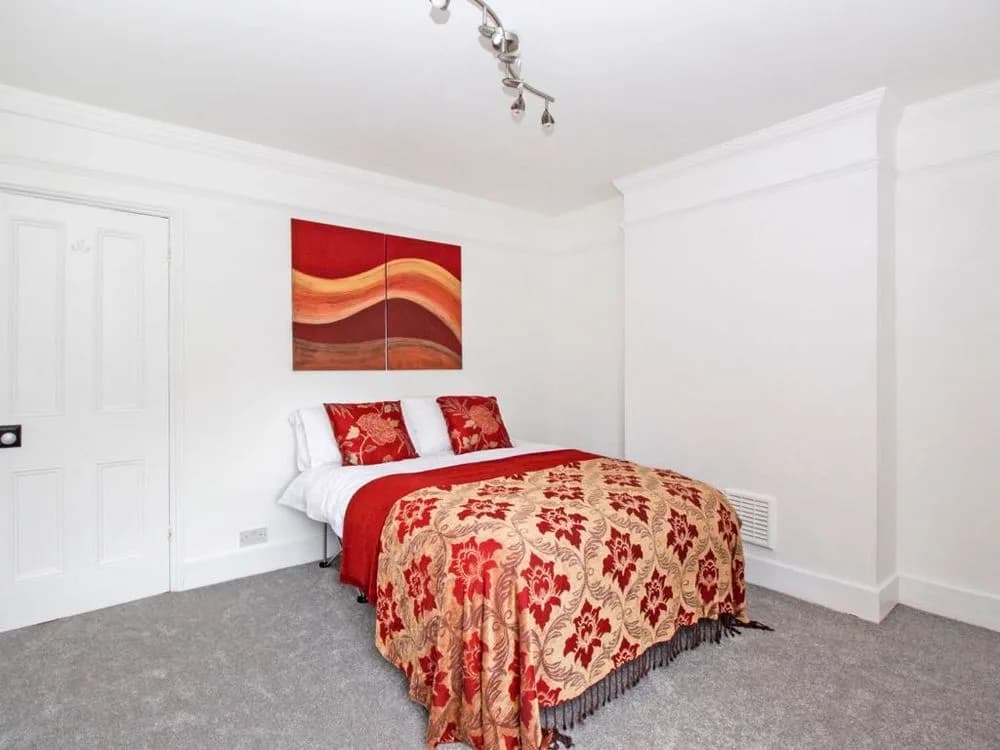
Our part comes at the last step of the order above: plastering, repairs and redecoration once the cause of damp has been dealt with and the wall has dried out, so the finish is not hiding a problem that will come back. For landlords and managing agents with blocks of flats, our communal area painting page explains how we work in shared halls, stairs and corridors.
More guides
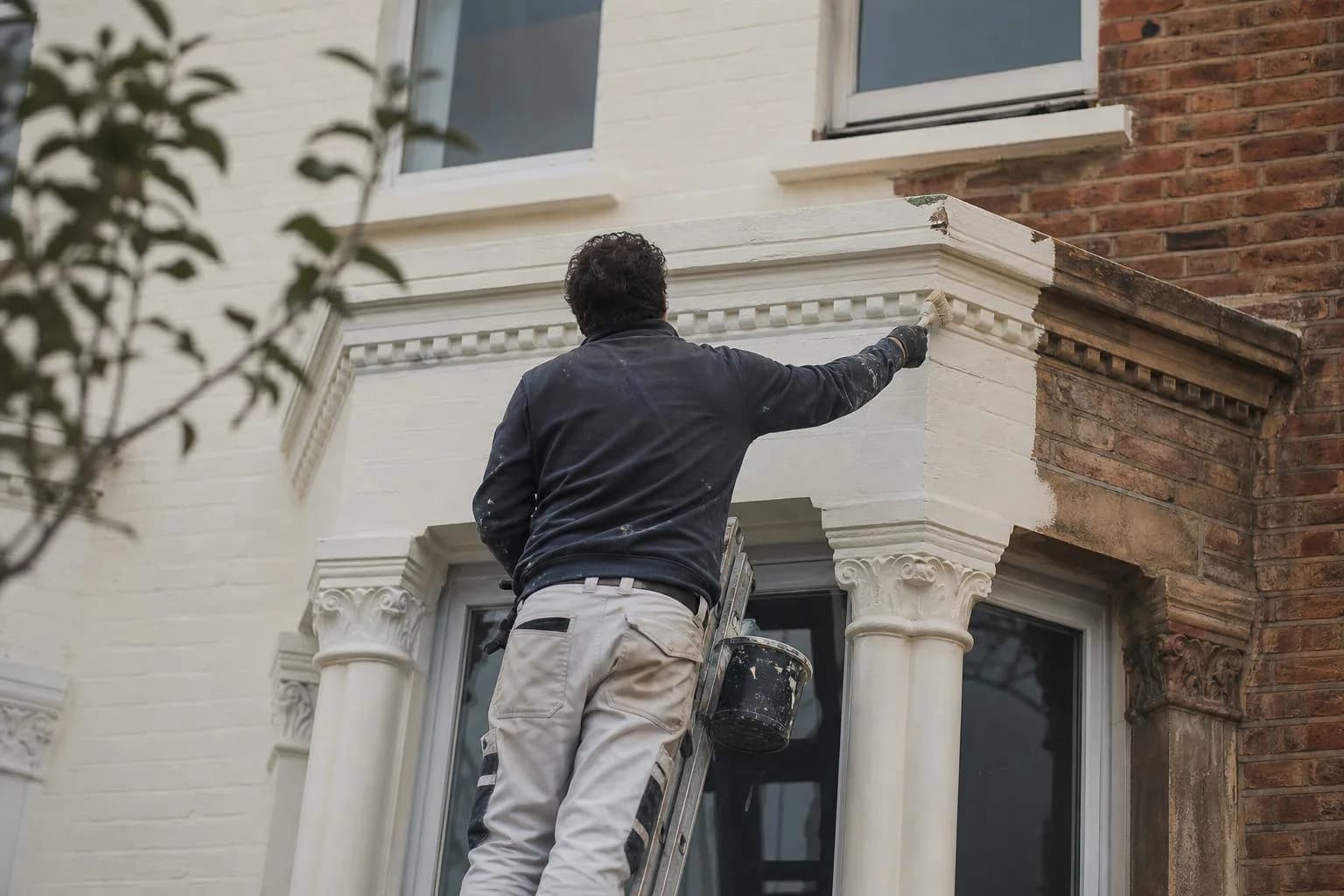
Should you paint brickwork?
Painting exterior brickwork? When bare brick is best left alone, which breathable paint to use, limewash, and when a listed house needs consent. Get a quote.
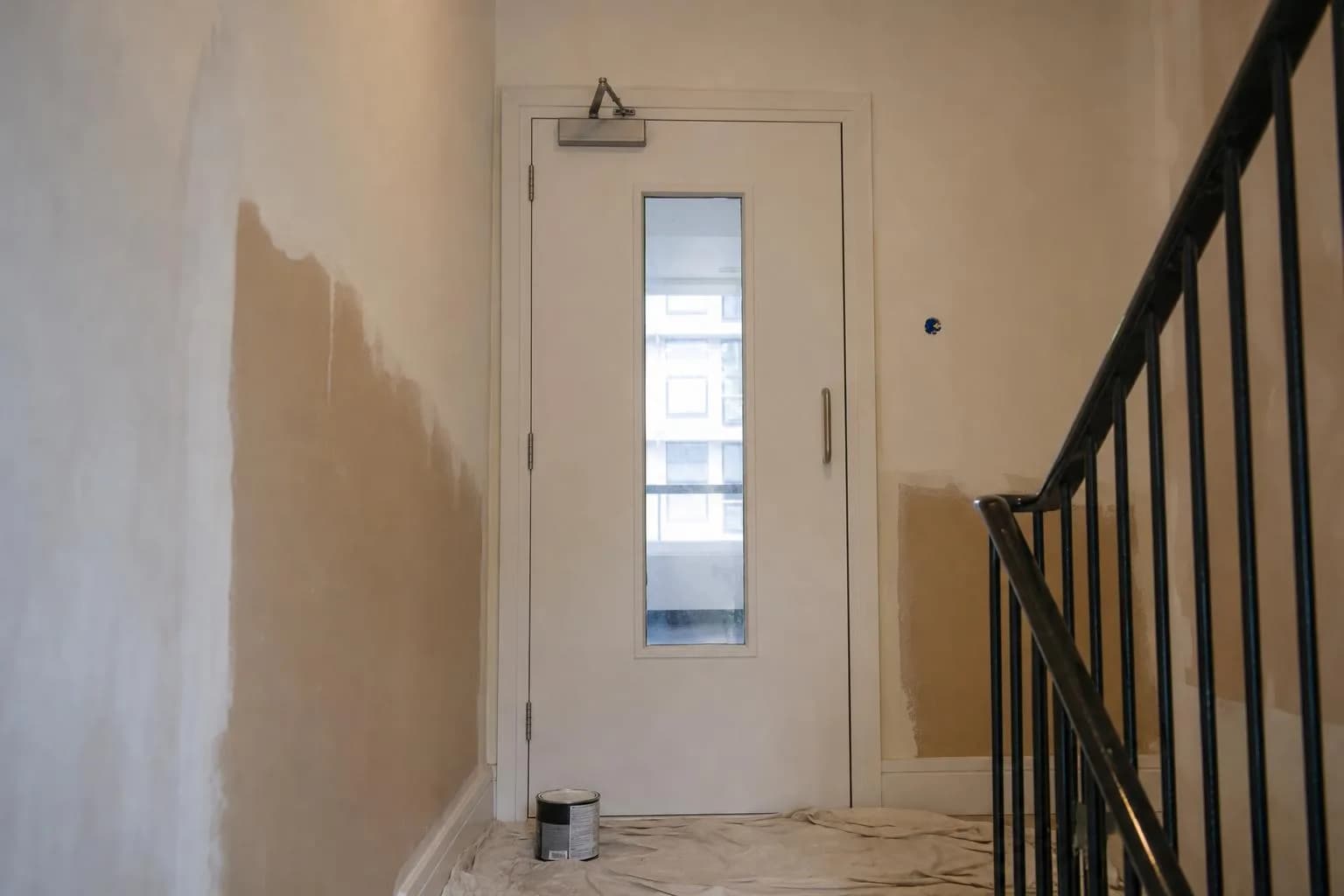
Painting fire doors: what the rules allow
Painting fire doors in a block of flats: what the fire door paint regulations check, which seals stay clean and how to paint one. Ask us for a quote.
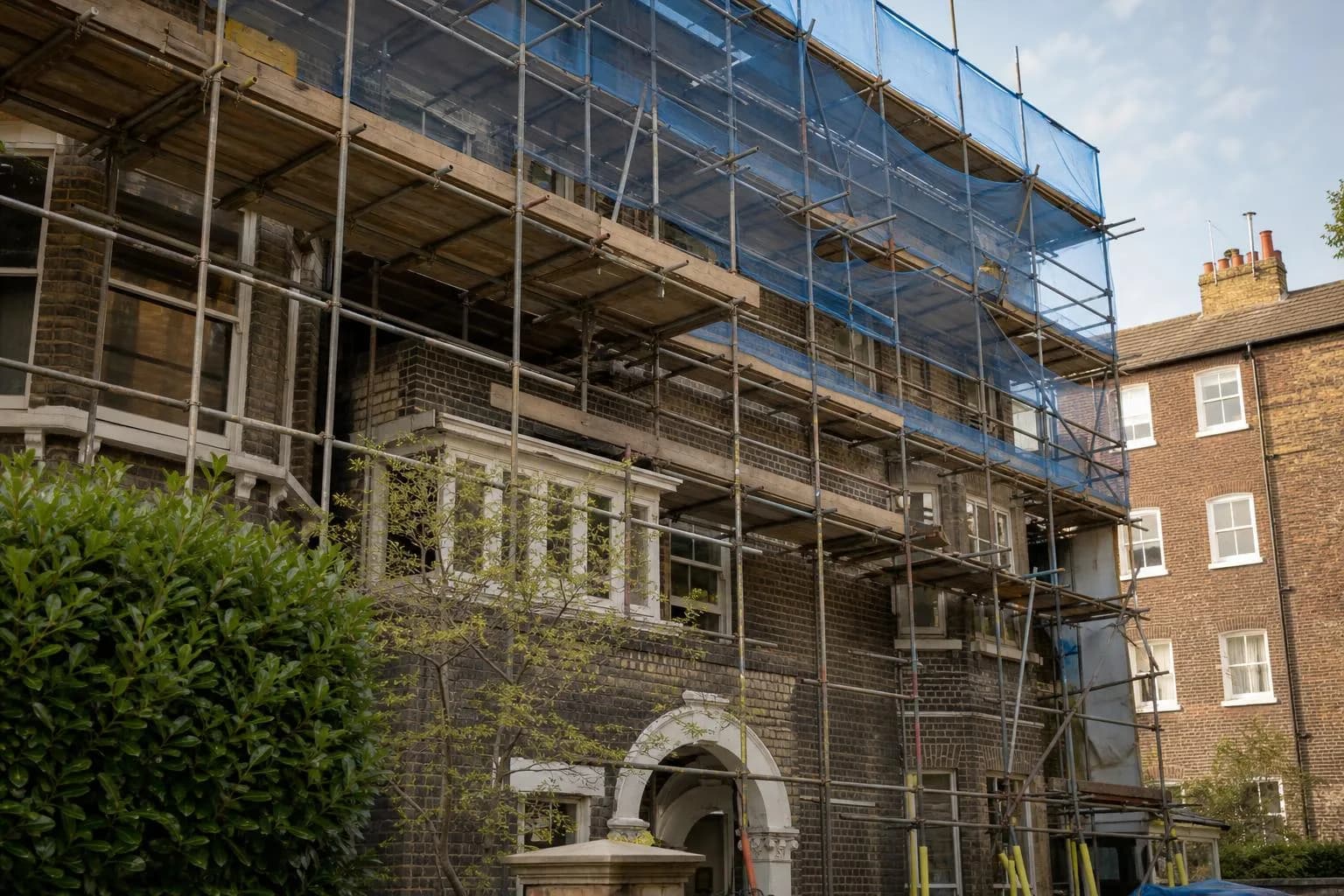
Section 20 works and consultation
Section 20 works explained by a contractor: the £250 threshold, the three consultation stages and what an estimate should show. Read the guide.
Frequently asked questions
Call 020 8249 7303
Does Awaab's Law apply to private landlords?
Not yet. The Renters' Rights Act will extend Awaab's Law to privately rented homes, but the deadlines will be set in future regulations, the government has said it will consult first, and no date has been set.
Is Awaab's Law retrospective?
No, but older hazards can be caught. The rules apply to hazards a landlord becomes aware of after they started (27 October 2025 for emergency and damp and mould hazards, 30 November 2026 for the hazards added in Phase 2), and to a hazard it already knew about if that is reported again, or changes materially, after that date.
Does Awaab's Law apply in Scotland or Wales?
No. The regulations apply to landlords of social homes in England only.
Does a hazard have to be Category 1 under the HHSRS?
No. A hazard can be in scope without reaching Category 1, because a particular tenant may be at greater risk, and no formal HHSRS assessment is required.
Do tenants have to fix the problem themselves?
No. The government's guidance says social landlords should not expect tenants to carry out work to make their homes safe.
Ask us about repairs and redecoration after damp
To talk about a job, contact Andrews Building & Decorating. You can find our other decorating and building guides for property owners and managers, including one on Section 20 consultation.